
Vacuum Cleaners and Attachments
Making the cleaning of your factory easier, quicker, and more effective.
Klipspringer’s range of industrial vacuum cleaners is built around how food factories actually work. Choose from Multi-Use models for wet and dry cleaning, ACD and ATEX-rated vacuums for combustible dust environments, dedicated dust extractors for fine airborne particles, and liquid vacuums for high-volume removal.
Within each range, there are options available for light, frequent, or continuous use, so you can match capacity and filter cleaning to how many hours a day your vacuum needs to run.
Klipspringer vacuum cleaners are compatible with a wide variety of colour-coded attachments and carbon composite poles. Jump straight to our Accessory Kits to find out more.
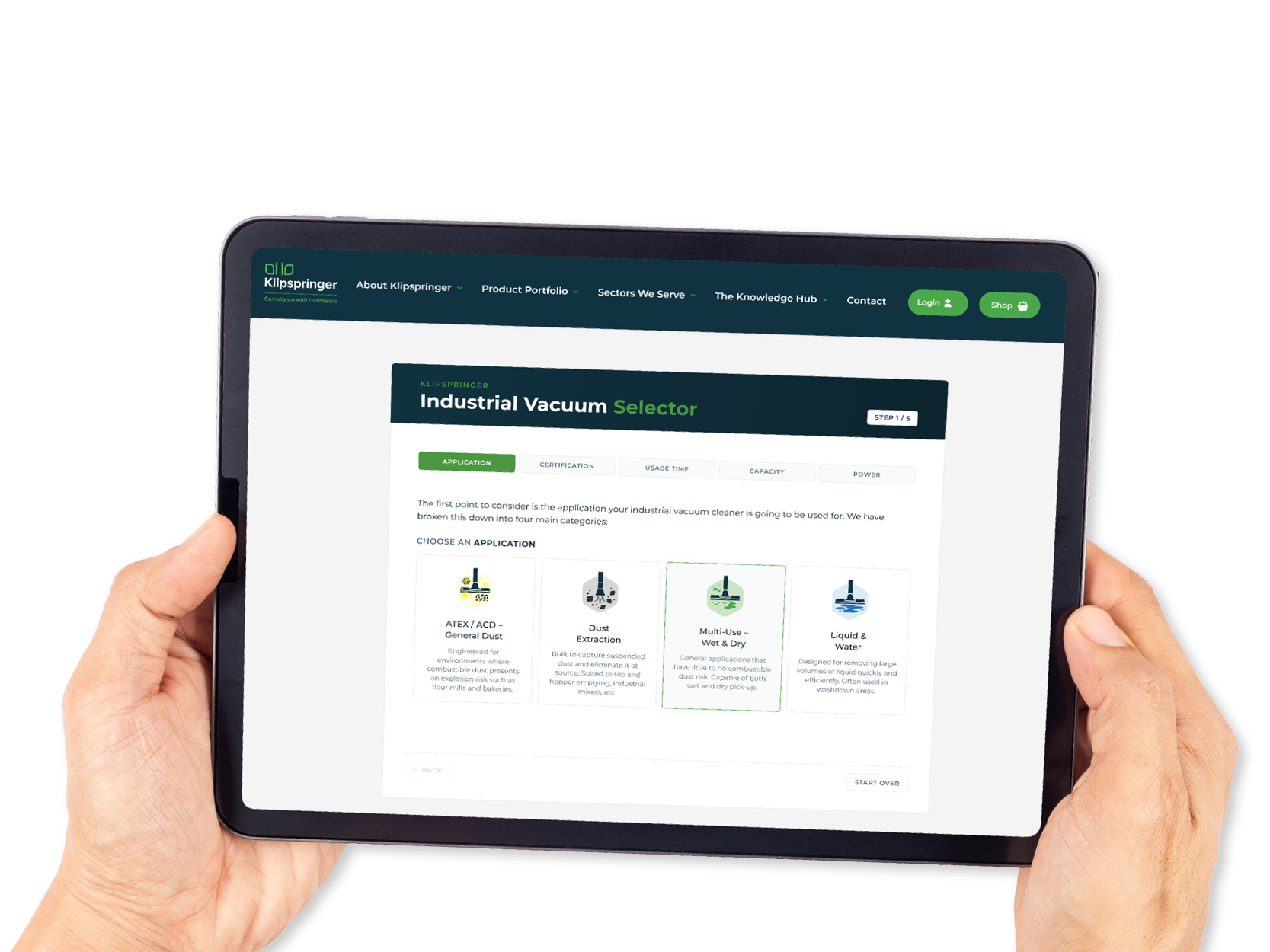
NEW! Industrial Vacuum Selector
You can now find the right Industrial Vacuum Cleaner for your food production site with our 5-step selection tool.
It covers the complete range, and at the end of the process, you will receive a link that takes you through to the relevant product page.

Improvehealth & safety

Savetime and cost

Support yourhygiene team

Enhancecompliance

Clean highreach areas

Reduce thehygiene window
Built for Specific Applications
Klipspringer Industrial Vacuum Cleaners have each been developed for a specific job on the factory floor.
Multi-Use (Wet & Dry)
Suited to general applications with little to no combustible dust risk. Capable of both wet and dry pick-up for routine cleaning tasks involving mixed debris.
ACD and ATEX-Rated
Engineered for environments where combustible dust presents an explosion risk e.g. flour mills, confectionery, pet food, protein powder, and bakeries.
Dust Extraction
Built to capture suspended dust and eliminate it at source. Best suited to silo emptying, packing lines, industrial mixers, and conveyor belts.
Liquid and Water
Designed for removing large volumes of liquid quickly. Frequently used in washdown areas and to clear standing liquid for safe conditions.
Options for Different Usage Levels
How many hours a day is your vacuum cleaner going run? This will determine the capacity and filter cleaning method you need.

Light usage(< 5 hours a day)
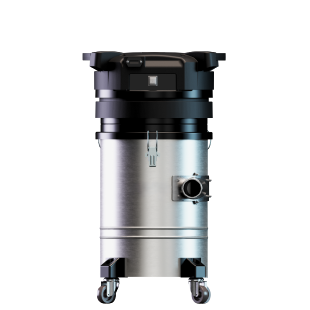
Suited to lower-intensity cleaning where mobility and simplicity come first. Capacity typically ranges from 20 to 50 litres, or 75 litres where liquid removal is involved.
Frequent usage(5 to 12 hours a day)
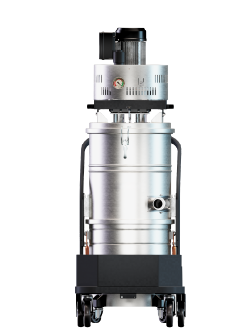
Built for regular daily use, with a recommended capacity of 75 litres, or 100 litres for liquid applications. A removable bin is standard, as static designs are better suited to lighter use.
Continuous usage(12+ hours a day)
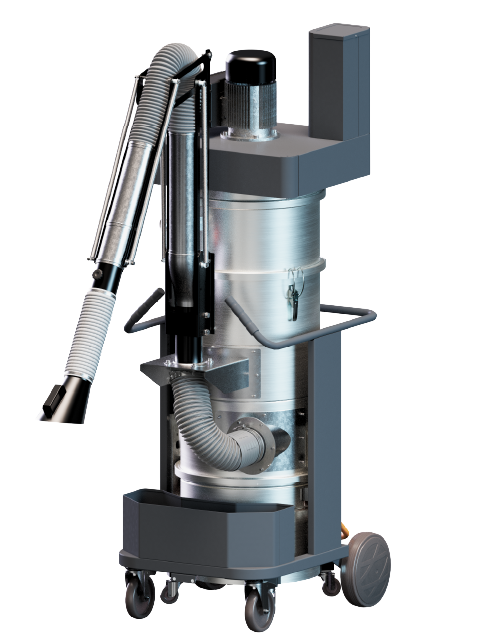
Designed for round-the-clock operations where downtime isn’t an option. These models typically offer 100 litres of capacity or a continuous bag system. Click here to learn more.
Vacuum Cleaners for Different Certification Levels
There are options for different certification levels: ATEX-21 and ATEX-22. There are also models suited to ACD requirements.
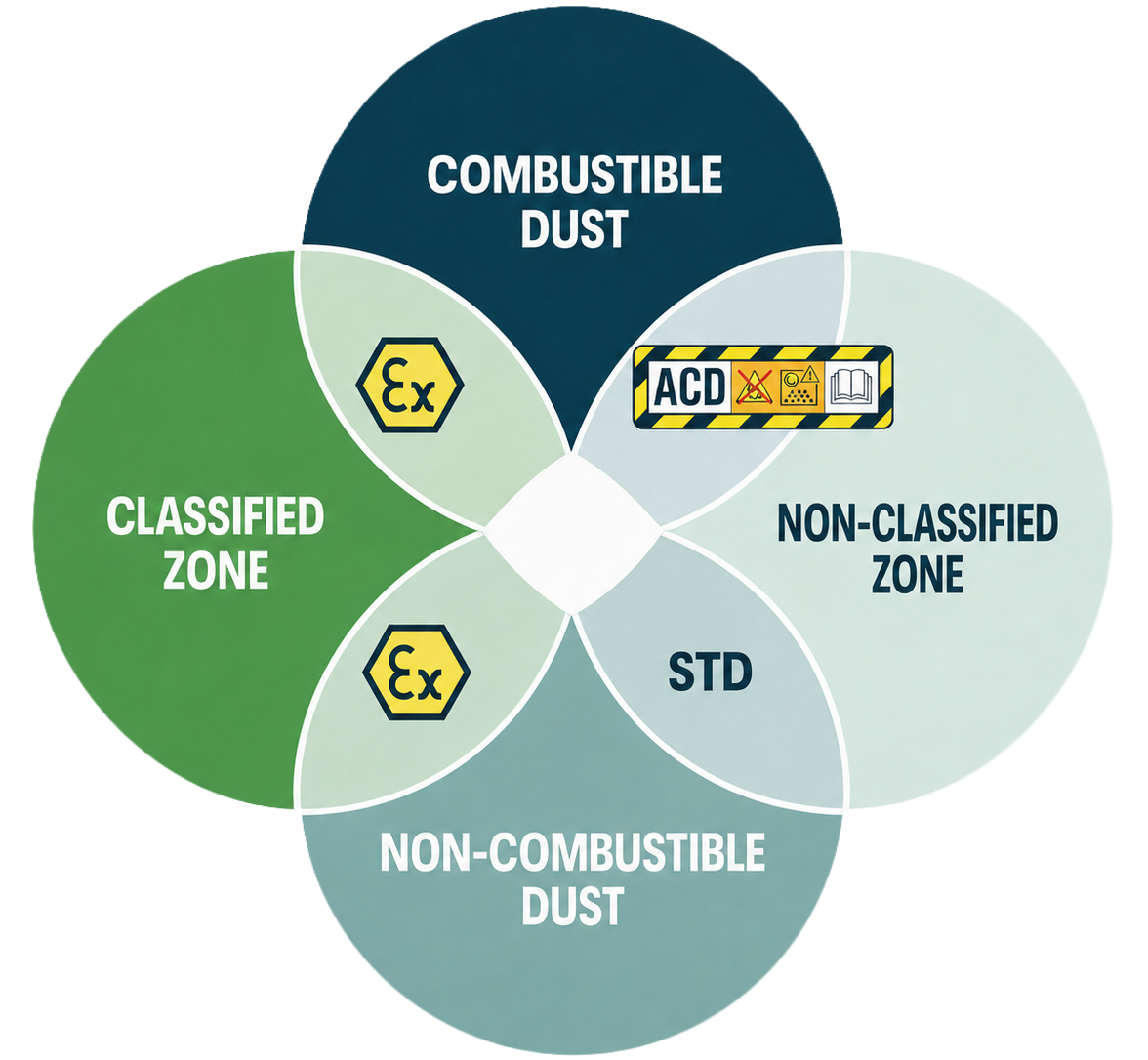
Classification | Definition | Typical Example | Certification Required |
Zone 21 | Combustible dust likely to occur occasionally during normal operation, as an explosive cloud. | Areas close to dust filling/emptying points, near mixers, or around powder transfer points. | ATEX-21 |
Zone 22 | Combustible dust not likely to occur during normal operation, but if it does, will only persist for a short period. | General factory floor areas near, but not directly at, dust-handling equipment. | ATEX-21 or ATEX-22 |
Unclassified Area (Combustible dust is present) | Not a formally classified ATEX zone, but combustible dust is still present in the environment. | General production areas where dust is generated but doesn't meet zone classification criteria. | ACD (Appliance for Combustible Dust) |
Application Videos
Take a look at our Industrial Vacuum Cleaners in action.
Range Highlights
Multi-Use Industrial Vacuum Cleaner - 25ltr Capacity
A compact industrial vacuum cleaner designed for efficient dust extraction in environments where portability and ease of use are essential.
- Compact and lightweight design
- Simple operation and maintenance
- Semi-automatic filter cleaning system
- Single by-pass brush motor
- Cartridge filter
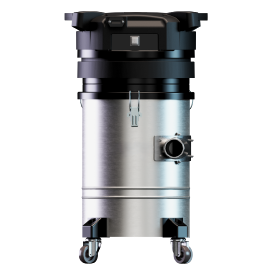
Multi-Use Industrial Vacuum Cleaner - 75ltr Capacity
Engineered for frequent use in environments where dry debris is the primary challenge, while also offering the flexibility to manage small volumes of liquid or slurry.
- Multi-use design for dust extraction with occasional liquid handling
- Side channel turbine motor for frequent operation
- Semi-automatic filter cleaning (pneumatic piston system)
- Cartridge filtration with high efficiency
- Robust and mobile industrial design
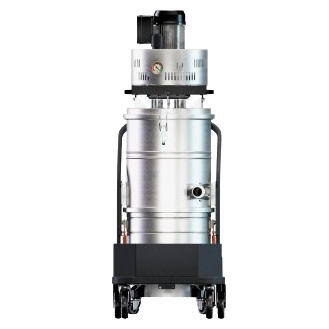
ACD Industrial Vacuum Cleaner - 50ltr Capacity
Twin brush motors and a manual filter cleaning system make this vacuum cleaner a robust, low-maintenance solution for cleaning of general dust and debris.
- Twin collector (by-pass) motors
- Manual filter cleaning by shaking
- Star polyester filter cartridge, 13,000 cm² surface area
- ACD design, suitable for use in non-classified zones
- Optional HEPA H13 filtration available
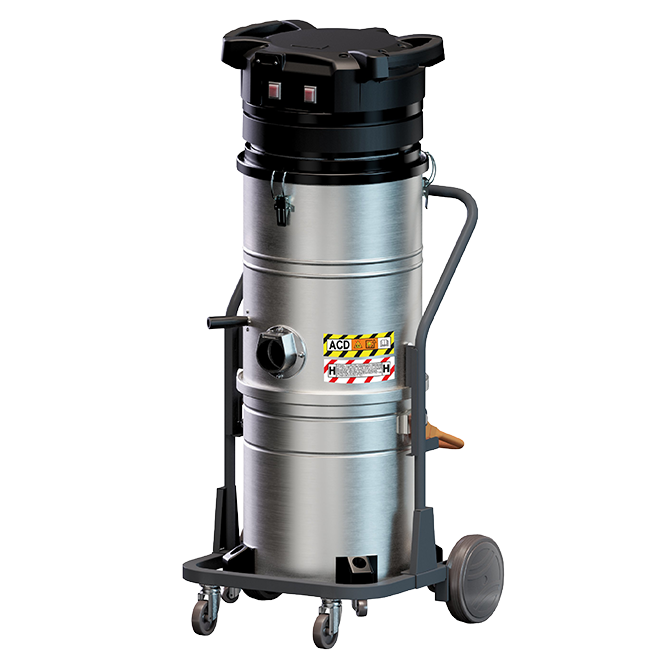
ATEX-22 Industrial Vacuum Cleaner - 75ltr Capacity
High-capacity industrial vacuum cleaner designed for efficient dust collection in potentially explosive environments. Ideal for larger volumes of dust.
- Semi-automatic pneumatic piston filter cleaning
- High-efficiency conductive cartridge filter (Class M)
- Turbine motor for consistent performance
- Designed for higher-capacity dust collection
- ATEX certified for dust environments (Zone 21 or 22 based on the model)
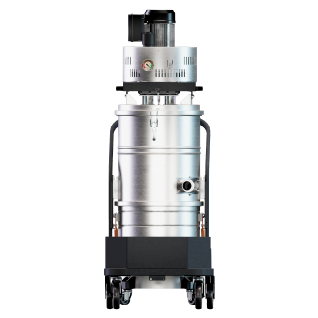
ATEX-22 Industrial Vacuum Cleaner - 75ltr Capacity
Powered by a compressed-air system, this vacuum cleaner delivers reliable pneumatic suction without electricity. It is ideal for ATEX-22 hazardous environments.
- ATEX-22 rated for hazardous dust environments
- Pneumatic Venturi Motor: powered by compressed air
- Semi-automatic pneumatic piston filter cleaning
- Cartridge filtration system
- 380 m³/h airflow and 280 mbar depression
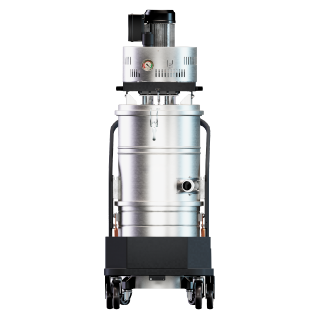
Multi-Use Industrial Vacuum Cleaner - Continuous Bag System
This vacuum cleaner has three filters and a continuous bag collection system for efficient, low-interruption cleaning in demanding environments.
- Versatile vacuum cleaner for occasional mixed-use cleaning tasks
- Continuous bag collection system
- Automatic filter cleaning system
- Side channel turbine motor for continuous operation
- 3-cartridge filtration system
- Optional HEPA filtration available
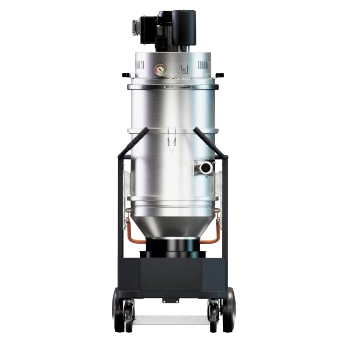
Liquid & Water Industrial Vacuum Cleaner - 100ltr Capacity
A high-capacity liquid and water vacuum cleaner designed for controlled fluid recovery in food manufacturing environments.
- Designed specifically for liquid recovery
- High-performance turbine motor for continuous operation
- Electronic magnetic liquid level sensor for overfill protection
- Integrated drain hose for fast, controlled emptying
- 100-litre collection capacity
- Robust and mobile industrial design
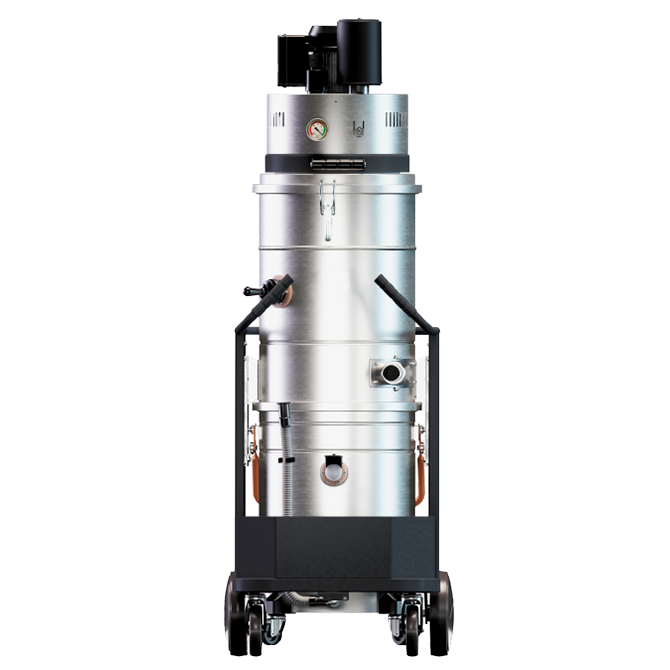
ATEX-22 Industrial Vacuum Cleaner - 50ltr Capacity
Powered by a centrifugal fan, this vacuum cleaner combines high airflow with a semi-automatic filter cleaning system.
- Centrifugal fan motor: high airflow: 1500 m³/h
- Semi-automatic filter cleaning
- Star polyester filter cartridge, 30,000 cm² surface area, L-class antistatic media
- Thermal-magnetic circuit breaker for electrical safety
- Optional HEPA filtration available
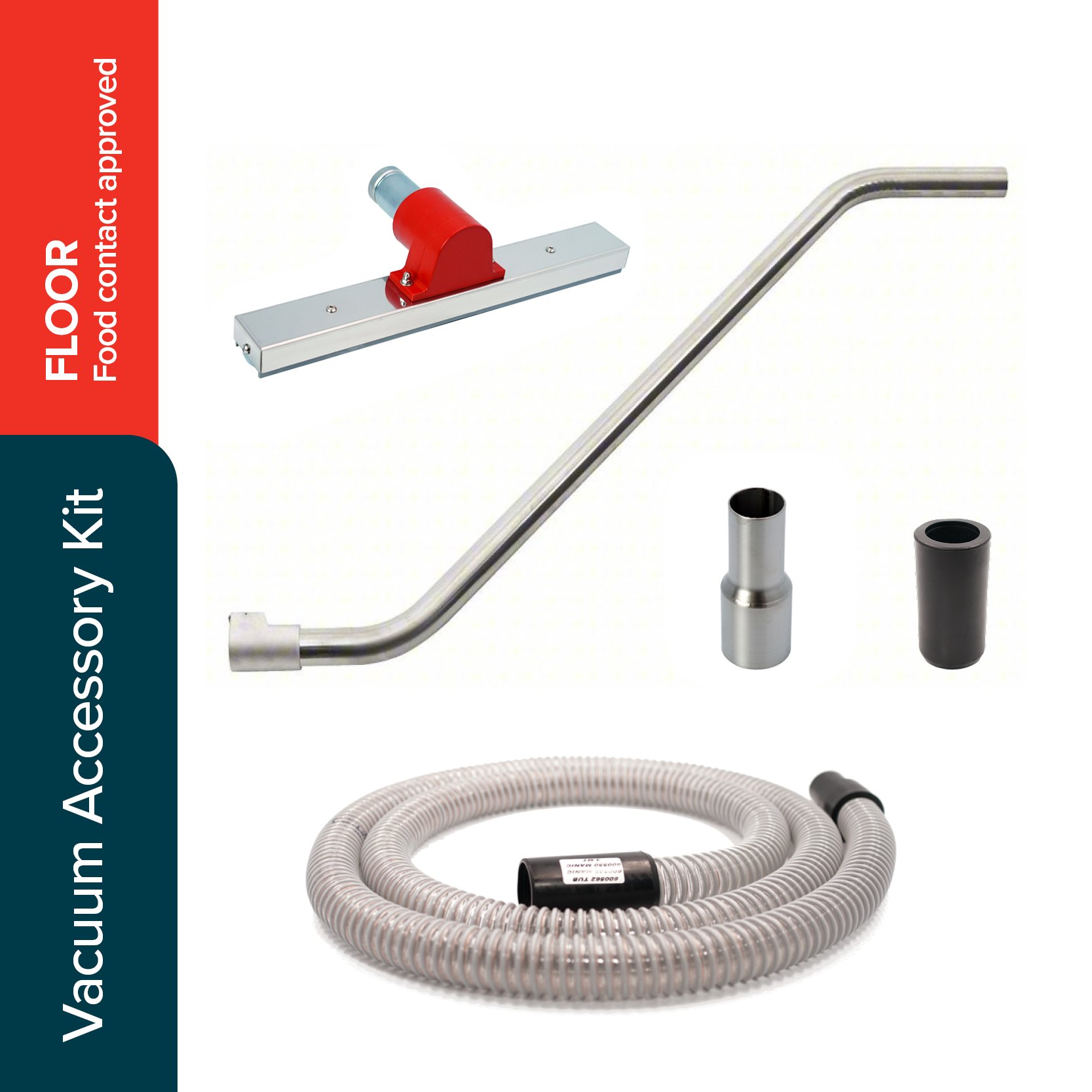
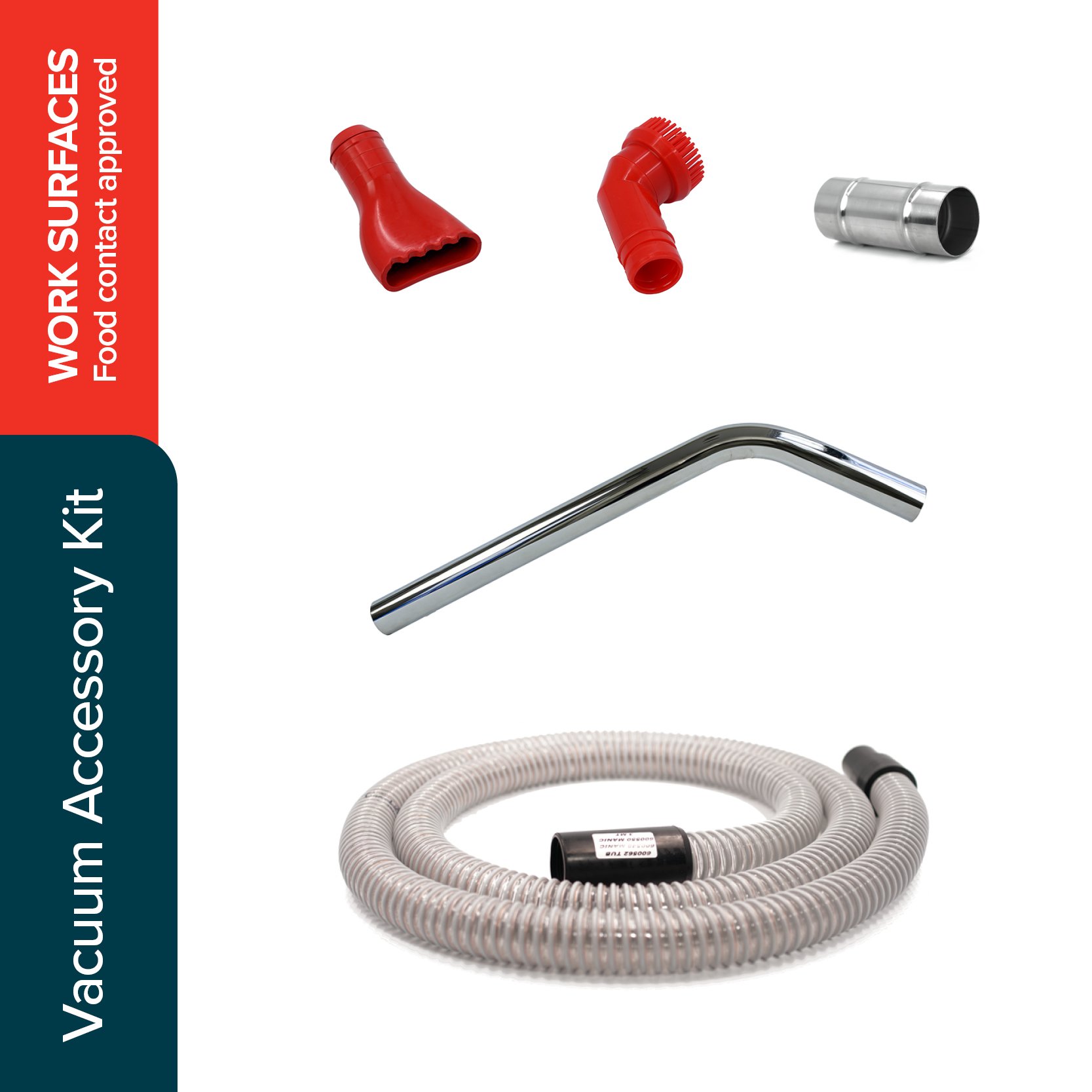
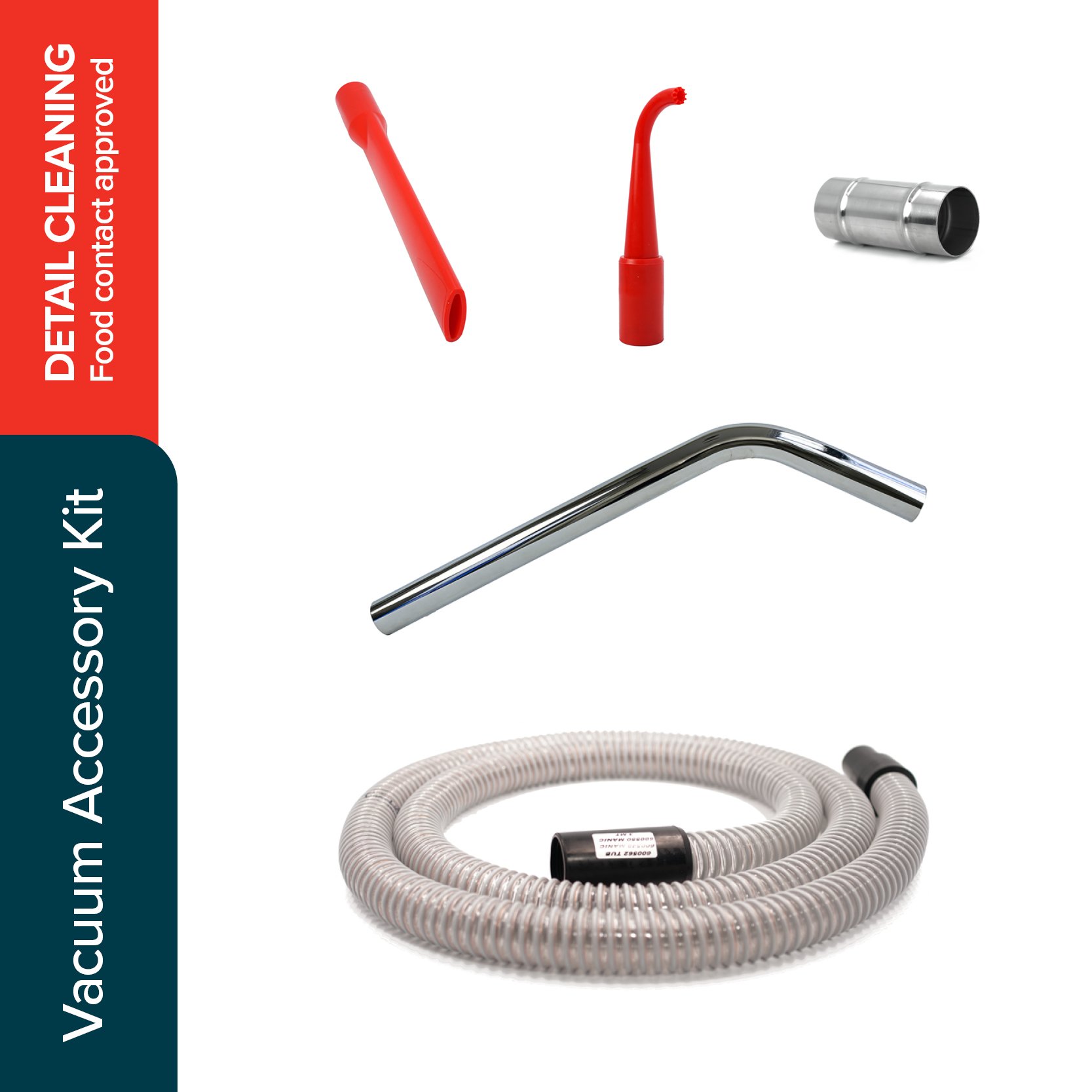
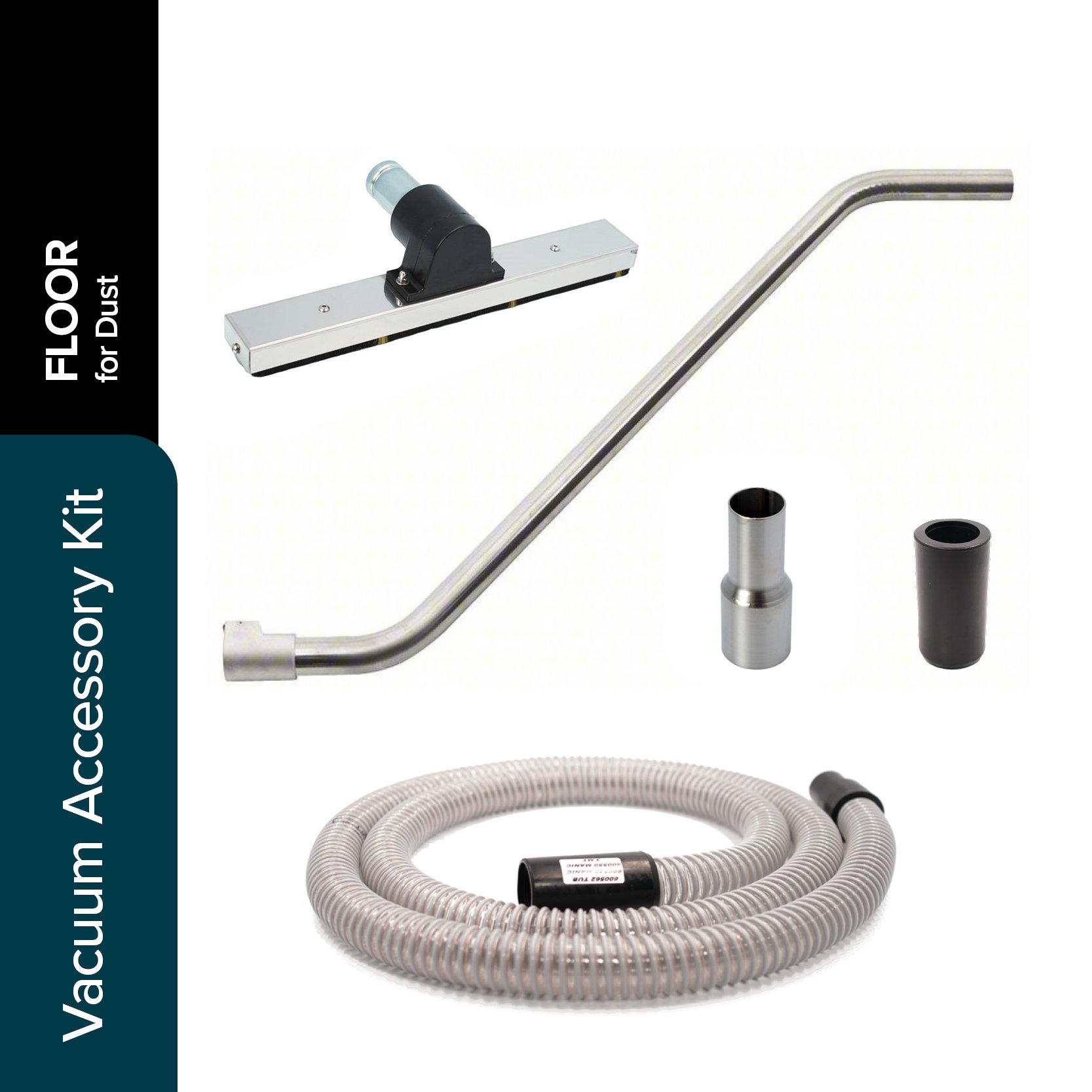
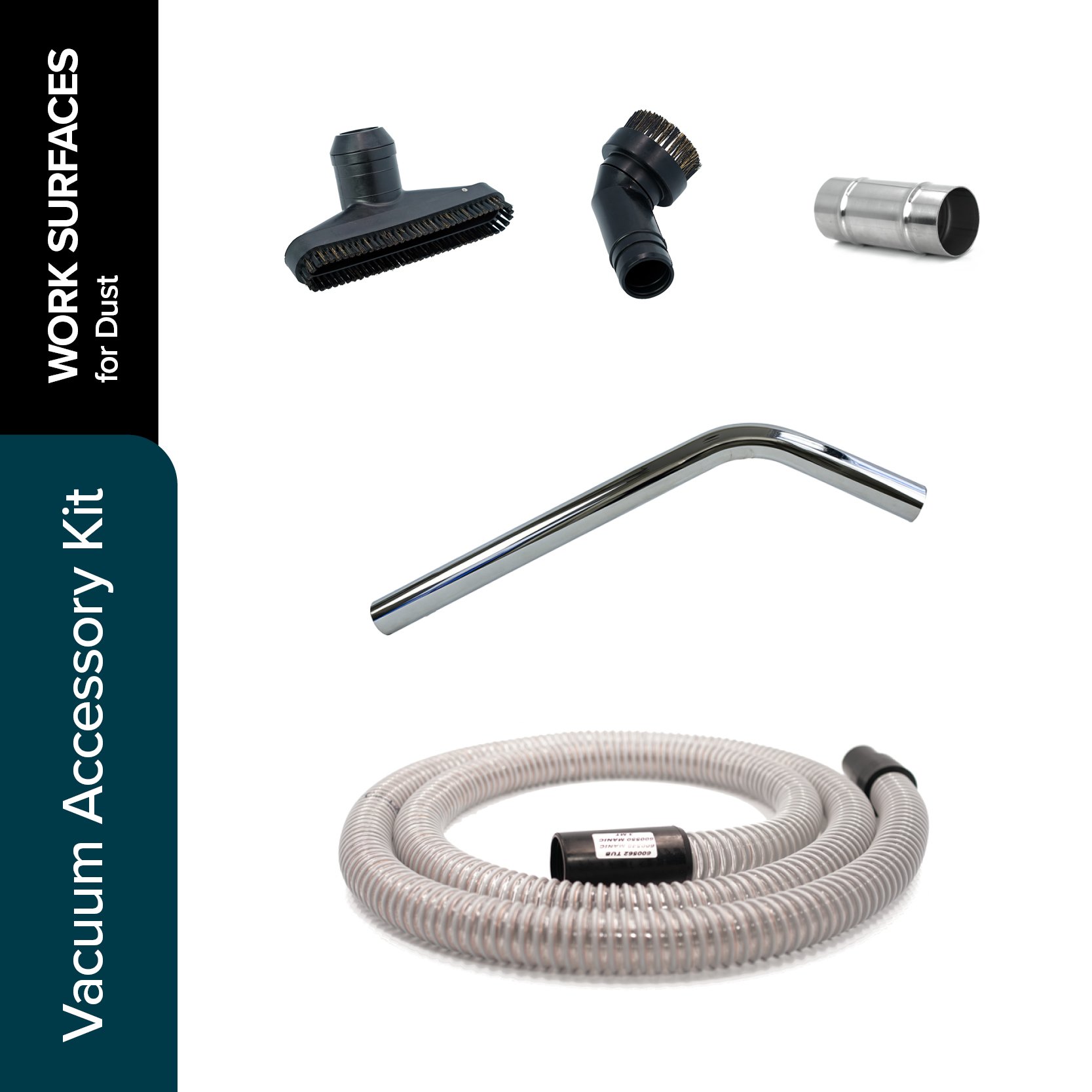
Vacuum Accessory Kits
Simplify set up with accessory bundles for specific applications. Food contact approved in up to four colours, with ATEX kits in black.
What’s the difference between your vacuum ranges?
We offer four ranges based on application: Multi-Use (Wet & Dry) for general cleaning with little to no combustible dust risk, ACD and ATEX-Rated for environments where combustible dust presents an explosion risk, Dust Extraction for capturing fine airborne dust at source, and Liquid & Water for removing large volumes of liquid quickly.
Do I need an ATEX or an ACD vacuum?
It depends on whether your site has a formally classified zone. Zones 20, 21, and 22 all require ATEX certification. If your site has combustible dust but no formal zone classification, ACD is the appropriate choice. The two aren’t interchangeable; using ACD in a classified zone would likely be a compliance and safety breach.
What’s the difference between ATEX Zones 20, 21, and 22?
Zone 20 covers areas where combustible dust is present continuously or frequently as an explosive cloud during normal operation, such as inside dust collectors or hoppers. Zone 21 covers areas where it’s likely to occur occasionally, such as near mixers or transfer points. Zone 22 covers areas where it’s not likely to occur, but if it does, only persists briefly, typically general factory floor areas near dust-handling equipment.
How do I know which usage level (light, frequent, continuous) I need?
It comes down to daily run time. Light usage is up to 5 hours a day, typically 20 to 50 litre capacity (75 litres for liquids). Frequent usage is 5 to 12 hours a day, recommended at 75 litres (100 litres for liquids) with a removable rather than static bin. Continuous usage is 12+ hours a day, typically 100 litres or a continuous bag system that seals off full sections while a new one takes over, minimising downtime.
What’s a continuous bag system?
It’s a dust collection method that lets the vacuum keep running without stopping for bag changes. One section seals and separates as it fills, while a new section is already in place to keep collecting.
What power supply do your vacuums need?
It depends on usage level. 110V industrial plugs suit light and frequent usage. 230V (UK standard or industrial) plugs suit light, frequent, and continuous usage. 400V three-phase industrial plugs are needed for frequent and continuous usage.
What is a tangential inlet, and why does it matter?
It’s a side-entry hose design that creates a cyclone effect as debris enters, rather than pulling it straight into the filter. This protects the filter from clogging and extends its lifespan, while keeping suction stronger and more consistent over time.
What’s the difference between automatic, semi-automatic, and manual filter cleaning?
Automatic cleaning runs continuously during operation and suits continuous or high-frequency use. Semi-automatic is operator-triggered when needed and suits regular use with occasional intervention. Manual requires the operator to physically remove and clean the filter, the simplest and most cost-effective option, suited to lighter use.
Why choose stainless steel construction?
It’s non-porous, so it resists bacteria and is easy to clean and disinfect. It also holds up well to frequent washdowns, moisture, and industrial cleaning agents without corroding, and its durability and temperature tolerance suit food factory environments specifically.
Do you offer vacuum attachments and accessory kits?
Yes. Kits bring together the attachments needed for a specific job, including floor cleaning, work surfaces, drain cleaning, detailed cleaning, and high reach. Food contact approved kits come in up to four colours, with ATEX-suitable kits available in black.
Can I use the same vacuum for both dust and liquid pick-up?
Our Multi-Use range is designed for both. If your site deals with large or frequent liquid volumes specifically, our Liquid & Water range, built in stainless steel with faster liquid removal in mind, is the better fit.
How do I know which vacuum is right for my site?
It depends on five things: your application (what you’re picking up), your combustible dust risk and zone classification, how many hours a day you’ll run it, your available power supply, and which features matter most to you. Contact our team on 01473 461800 or sales@klipspringer.com and we’ll help you match a model to your site.


 Shadow Boards & Equipment Storage
 Visual Management
 Hygiene & Production Equipment
 Food Handling & Storage Containers
 Instrumentation and Monitoring
 Calibration & Service
 Segregation & Washdown Covers
 Detectable Equipment
 Specialist PPE
 Stainless Steel Equipment
 Hygiene Squeegees
 Vacuum Cleaners
 Food Manufacturing
 Food Storage, Distribution & Retail
 Auditors & Food Safety Inspectors
 Food Service & Hospitality