
Discover how smarter equipment storage, improved processes and digital solutions can help your team save valuable time.
Small inefficiencies in a commercial kitchen can quickly add up, particularly when your team is working under pressure. Whether it’s searching for misplaced equipment, carrying out routine checks or training new employees, these everyday tasks can take valuable time away from other important responsibilities.
So, what can you do to make your kitchen more efficient? In this article, we’ll explore four practical ways to save time, from improving equipment storage and simplifying fryer oil management to making staff onboarding easier and introducing digital solutions. We’ll also look at how a simple time audit can help you identify the best place to start.
1. Stop Wasting Time Searching for Missing Equipment
Searching for equipment is one of the most common causes of wasted time in a busy kitchen. Whether it’s a missing thermometer, a misplaced food oil monitor or a colour-coded cleaning tool, having to search for frequently used equipment can interrupt service and slow your team down.
What’s more, when equipment doesn’t have a clearly defined home, there is a greater risk of items being misplaced, damaged or used incorrectly. This can create additional work for your team and potentially compromise important food safety procedures, particularly when it comes to allergen management and cross-contamination.

So, what is the solution? One option is to introduce dedicated shadow boards for your cleaning and food preparation equipment.
By giving every item its own clearly defined position, these boards make it easier for team members to identify, locate and return the equipment they need. Colour-coding and instructional messaging can also help to reinforce the correct procedures at your site.
For more valuable technical equipment, such as Food Oil Monitors and Thermometers, Instrument Stations offer another practical solution. These provide dedicated storage that helps to protect your instruments from damage whilst keeping them accessible whenever they are needed.
Not only can these solutions reduce the time spent searching for equipment, they can also help to extend its lifespan, reduce unnecessary replacements and make it easier for your team to maintain consistent standards.
2. Take the Guesswork Out of Fryer Oil Management
If your commercial kitchen uses fryers, you will likely be familiar with the time involved in managing food oil. From monitoring its condition to arranging oil changes and disposing of used oil, this is an important process that can have a significant impact on your team’s productivity.
Unfortunately, many sites still rely on set replacement schedules or individual team members making a judgement based on the appearance of the oil. This can lead to unnecessary oil changes, as darker oil doesn’t always mean it has reached the end of its usable life. Its appearance can be affected by several factors, including the type of oil being used and the products being fried.
On the other hand, relying on visual checks alone could mean oil is kept in use for longer than it should be, potentially affecting food safety and finished product quality.
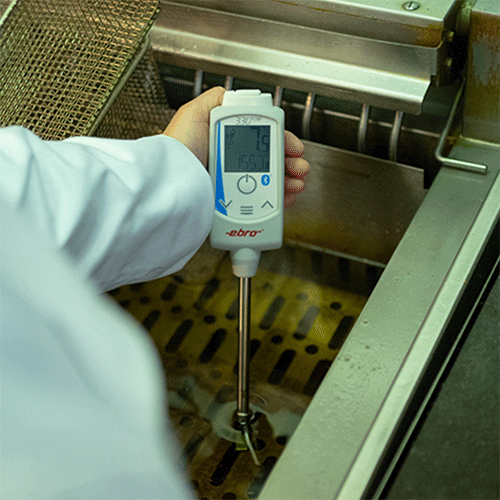
The Food Oil Monitor offers a straightforward way to remove this guesswork. Using a simple traffic light system alongside a numerical reading, it provides an objective measurement of oil quality, allowing your team to establish exactly when oil needs to be changed.
What’s more, the monitor can identify when oil is approaching the end of its usable life, giving your team time to prepare for an upcoming change. Rather than having to respond to unexpected oil changes during busy periods, you can plan this task around your site’s operational requirements.
By introducing a consistent approach to oil management, you can also reduce the time spent debating whether oil needs to be replaced, helping different team members and shifts to follow the same process. This could save valuable time, reduce unnecessary oil changes and help to maintain consistent food quality.
3. Simplify and Speed Up the Process of Onboarding New Team Members
Training new employees and agency workers can be a significant drain on time, particularly in kitchens where teams are already working under pressure.
Every new team member needs to understand how your kitchen operates, from where equipment is stored to how food safety checks should be completed. However, when these processes aren’t clearly documented or communicated, senior team members can find themselves answering the same questions repeatedly.
This takes valuable time away from cooking, supervising and other important responsibilities. It can also increase the risk of mistakes, particularly when new starters are unfamiliar with colour-coding procedures, equipment segregation or allergen management.

To make the onboarding process easier, you should consider how much information your team can access independently, without having to ask a colleague for assistance.
For example, introducing visual management boards, clear signage and instructional messaging can help new employees understand important procedures at a glance. Combining this with colour-coded equipment and dedicated shadow boards will also make it easier to identify which utensils should be used for specific tasks and where they need to be returned.

Another option is to introduce bespoke Instrument Stations featuring company branding, step-by-step instructions and helpful photographic guides. This can be particularly useful for equipment that requires specific handling or regular verification.
By making key information readily available, you can reduce the time spent explaining everyday procedures, helping new and temporary team members become confident and productive.
4. Move from Manual Processes to Digital Solutions
Another opportunity to save time in your commercial kitchen is to review the way your team currently completes routine food safety checks and records information.
Manual processes can be surprisingly time-consuming, particularly when team members are required to complete multiple checks throughout the day, record their findings and report any issues to the relevant people.
A Digital Quality Management System can help to simplify these processes, reducing paperwork and removing the need for team members to spend unnecessary time completing and reviewing manual records.
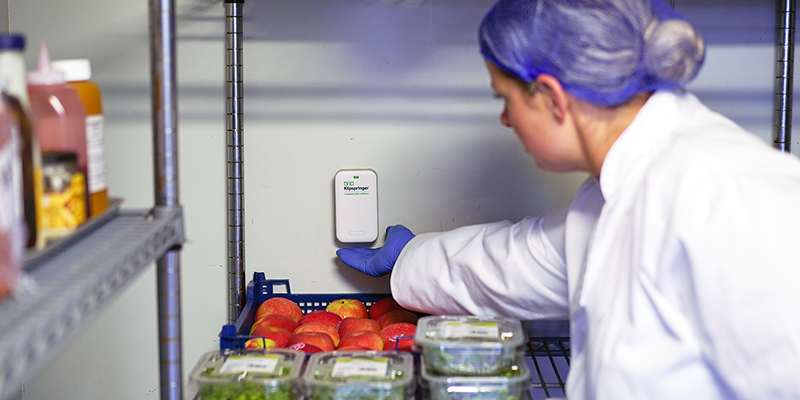
What’s more, when connected to Wireless Temperature Sensors, the right system can automatically monitor the temperatures of refrigerators and other storage areas, sending alerts to relevant team members if readings fall outside acceptable parameters. This means your team doesn’t have to rely solely on manual checks to identify potential problems, allowing issues to be investigated and resolved before ingredients are compromised.
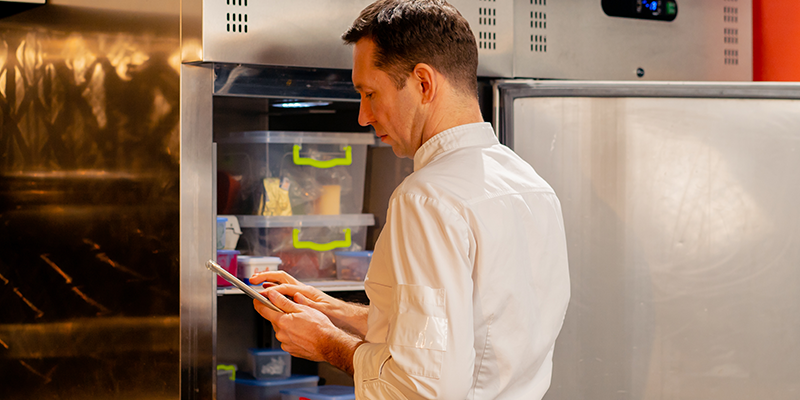
Digital systems can also make it much quicker to investigate recurring problems. For example, if one site within a larger group is experiencing more stock wastage than others, you can review relevant data to identify potential causes. This could include temperature fluctuations, refrigerator doors being left open for extended periods or particular shifts experiencing recurring issues.
Instead of spending hours searching through paperwork and trying to establish what has happened, your team can access the information they need in one place.
As well as saving time on routine admin, a Digital Quality Management System can help to improve traceability, support faster decision-making and free up team members to focus on other priorities.
Carrying Out a Time Audit at Your Site
If you’re unsure where your commercial kitchen is losing the most time, a simple time audit could help you identify the biggest opportunities for improvement.
By reviewing everyday activities over a typical working week, you can establish which processes are taking longer than they should and where relatively small changes could make a difference.
To get started, consider the following steps:
- Choose a typical working week. Avoid unusually quiet periods or weeks affected by one-off events, so your findings provide a realistic picture of everyday operations.
- Monitor interruptions. Ask team members to record how often they have to search for equipment, repeat checks or stop what they are doing to answer questions from colleagues.
- Review routine food safety checks. Record how long it takes to complete temperature checks, equipment verification and associated paperwork, paying particular attention to tasks that need to be repeated throughout the day.
- Evaluate your oil management process. Look at how frequently fryer oil is changed and whether decisions are based on objective measurements, set schedules or individual judgement.
- Calculate the time involved. Add up the minutes spent on these activities and multiply this by the number of shifts across your site. You may be surprised by how much time is being lost over the course of a week.
- Prioritise the biggest opportunities. Instead of changing everything at once, identify the most significant time drain, introduce a practical solution and review the results after a few weeks.
The aim isn’t to make your team work harder or rush through important tasks. Instead, it’s about removing unnecessary interruptions and making everyday processes as straightforward as possible, giving your team more time to focus on the responsibilities that matter most.
At Klipspringer, we work with hospitality businesses across the UK to help teams save time and improve operational efficiency. From bespoke shadow boards and colour-coded equipment to Instrument Stations, Food Oil Monitors and Wireless Temperature Sensors, we offer a range of solutions designed to make everyday kitchen processes easier.
If you’re interested in discovering where your kitchen could be saving valuable time, you can arrange a site survey or get in touch with our team at 01473 905 832 or sales@klipspringer.com. Alternatively, complete the contact form below.
If you have any questions about the solutions mentioned throughout this article, share your contact details below and we will be in touch.

About the Author
Libby Loughnan is Content Manager at Klipspringer, specialising in food safety and compliance. She writes extensively on helping commercial kitchens improve food safety, cut costs, and work more efficiently, covering everything from equipment storage to food oil management.


 Shadow Boards & Equipment Storage
 Visual Management
 Hygiene & Production Equipment
 Food Handling & Storage Containers
 Instrumentation and Monitoring
 Calibration & Service
 Segregation & Washdown Covers
 Detectable Equipment
 Specialist PPE
 Stainless Steel Equipment
 Hygiene Squeegees
 Vacuum Cleaners
 Food Manufacturing
 Food Storage, Distribution & Retail
 Auditors & Food Safety Inspectors
 Food Service & Hospitality